Glossary
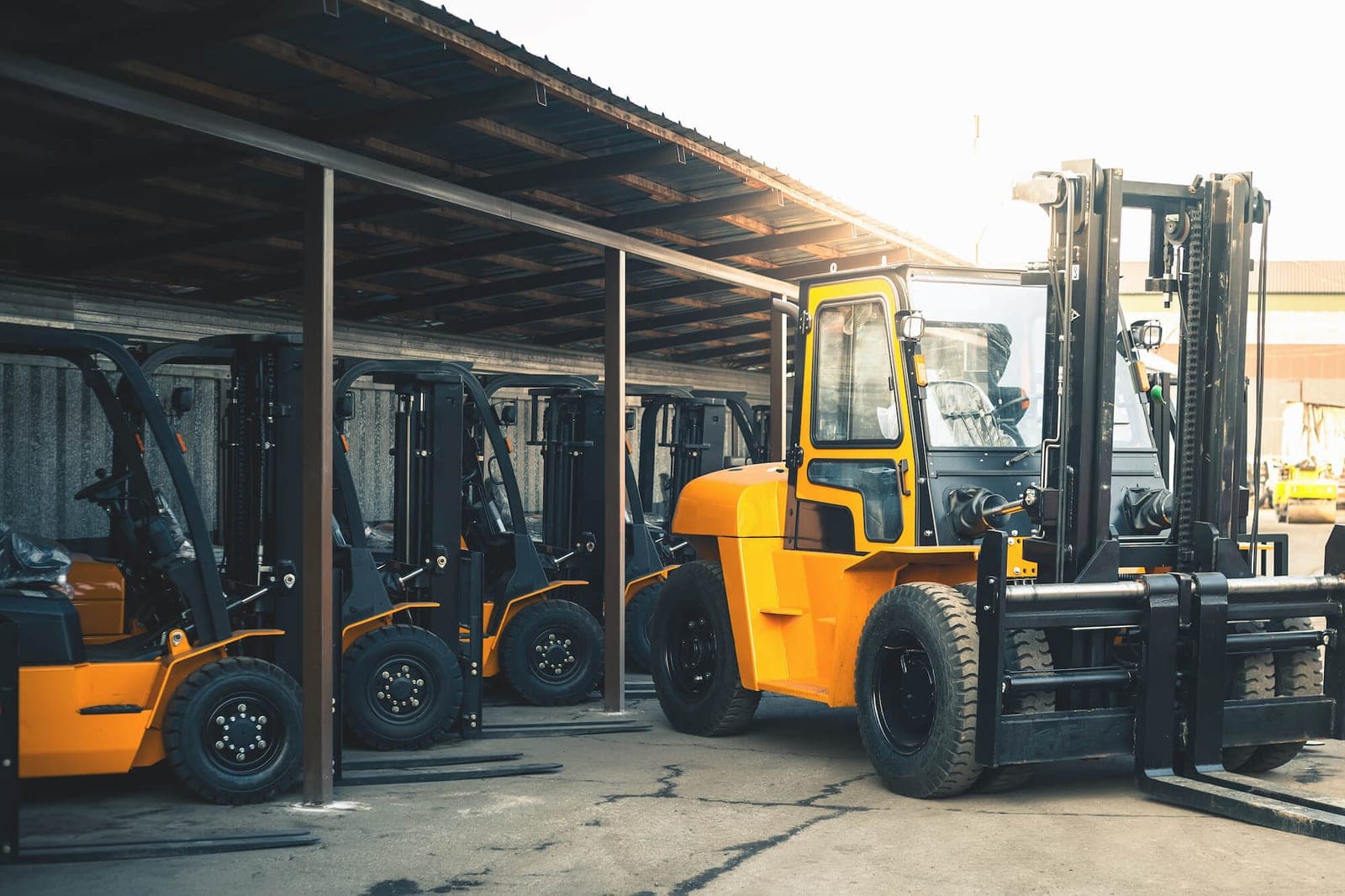
Forklifts, or forklift trucks, are workhorses that many industries depend on every day. You will find them in warehouses, manufacturing plants, dockyards, recycling facilities, and plenty of other settings. The pronged device at the front lets operators move and lift heavy or bulky loads without the manual strain. This article walks through the different types of forklift inspections, what each one contributes to a safer and more efficient workplace, and how the right software takes the friction out of forklift management and maintenance.
Key Takeaways
- Forklifts or forklift trucks are vehicles with a pronged device that are used to lift and transport heavy items.
- LOLER 1998 and PUWER 1998 regulate how and how often forklifts should be inspected.
- Forklift checks should be carried out daily (forklift pre-use checks), weekly, and every 6 to 12 months.
- Examples of things that should be inspected during every pre-use check are safety features, tyres, or oil and fuel levels as well as the immediate environment.
What Are Forklift Checks?
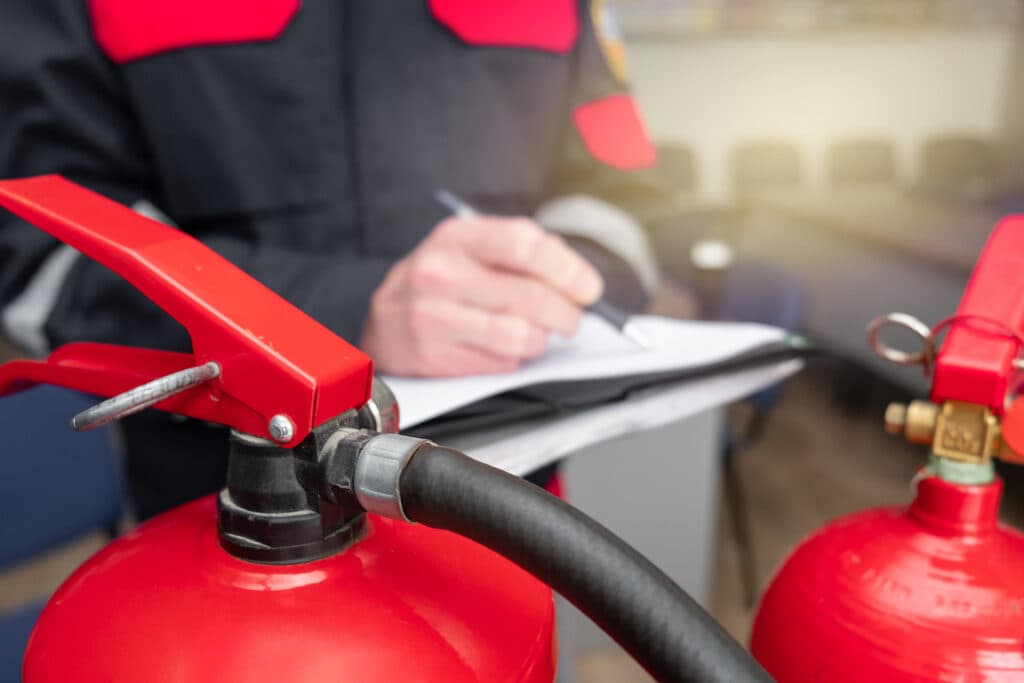
Like most machines and equipment, forklift trucks need checking at regular intervals to confirm they are in working order and safe to operate. Those checks come in several forms: daily checks, weekly audits, thorough inspections, and either visual or operational reviews. They are not just good practice — they are required by law under LOLER 1998 (Lifting Operations and Lifting Equipment Regulations) and PUWER 1998 (Provision and Use of Work Equipment Regulations).
Daily, Weekly and Thorough Inspections
Forklift checks can be sorted two ways: by how they are carried out, and by how often. Start with the method. A visual check inspects the truck from the outside for any faults or damage you can see — tyre damage or incorrect air pressure, obvious leaks, general wear on the chassis. An operational check goes further, testing the forklift's functionality while it runs so you know the engine, safety features, and mechanical parts all behave as they should.
The other way to split inspections is by frequency and depth. There are three:
- Daily checks
- Weekly checks
- Thorough examination
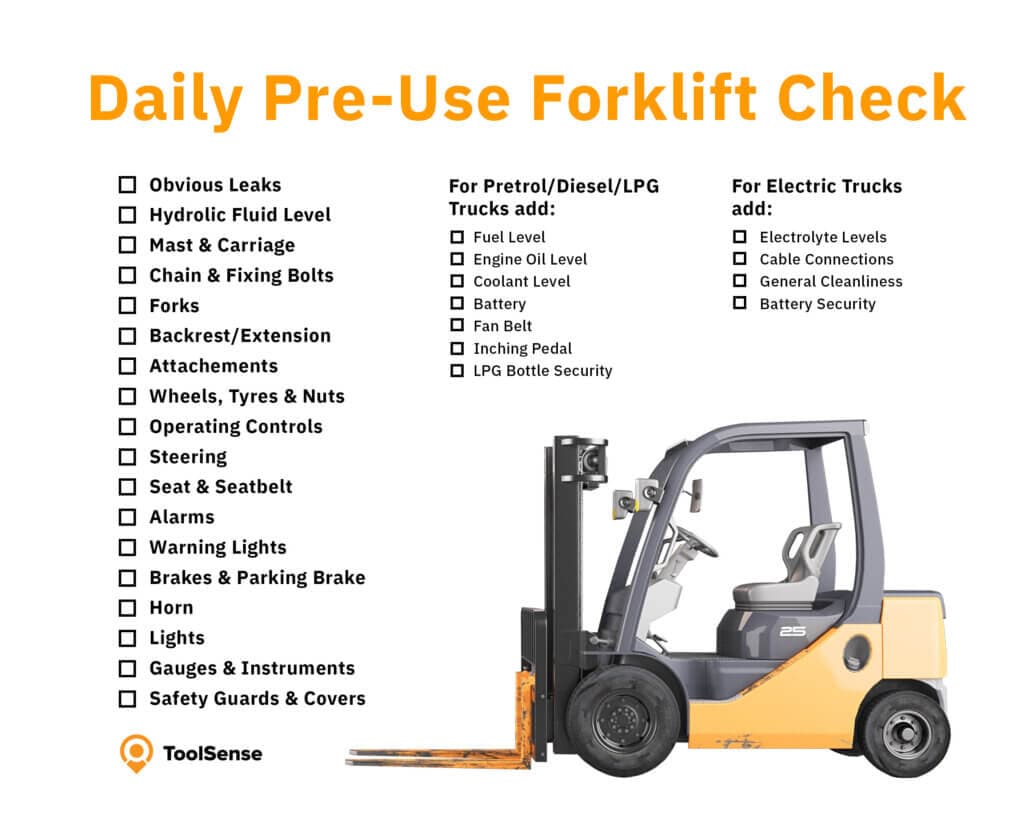
Daily or Pre-Operational Forklift Inspections
Daily forklift inspections — also called forklift pre-use checks or pre-operational checks — are done by the forklift operator at the start of the workday, the start of the shift, or before every use. That last habit is where the name "pre-use check" comes from. These checks are not optional. They are a legal requirement that protects the operator and everyone working nearby.
Don't confuse an operator's pre-use check with the thorough examination that happens every 6 to 12 months. The pre-use check is a quick scan meant to catch small problems before they grow into the kind of failures that cause downtime or accidents. Operators aren't specialists, so they can't be expected to find and fix major machine flaws, which is why the daily check stays deliberately simple. The smart move is to give every operator a forklift daily checklist to work through, so nothing slips. Such a checklist can include:
- General state and any obvious damage
- Tyres
- Engine oil level
- Hydraulic fluid level
- Safety features (brakes, lights, alarms, sensors)
- Battery
- Nuts, bolts, and chains
- Hydraulic systems
- Parking brake
- Warning lights and other warning devices
- Forks
- Exposed wires
- Fluid leaks
- Seat and seat belt
- Checking your environment for potential sources of accidents
Weekly Forklift Checks
A weekly inspection covers much of the same ground as a daily one, but it digs deeper and takes more time and effort. The hydraulics, chains, and transmission oil levels in particular deserve a close look here, since a missed problem in any of them can mean expensive repairs or a breakdown. Where the daily check belongs to the operator, the weekly audit can be handed to an expert engineer.
Thorough Examination
Just as cars and other vehicles need a yearly MOT, forklifts must undergo a thorough examination under the Lifting Operations and Lifting Equipment Regulations 1998 (LOLER) and the Provision and Use of Work Equipment Regulations 1998 (PUWER). In a LOLER inspection, a competent person thoroughly examines equipment used for lifting, forklifts included. The HSE (Health and Safety Executive) publishes specific guidelines on who counts as qualified to do this. Once the inspection is complete and everything checks out, a certificate — a written report — is issued.
Forklift Pre-Check Routine
This Health and Safety Authority of Ireland video on vehicle safety in the workplace should give you a better understanding of the routine of pre-testing forklifts.
The Importance of Checks Before Forklift Operations
Pre-use checks, weekly checks, and thorough examinations can look like a time-consuming, expensive habit at first glance. Yet they earn their keep, and any company tempted to skip the next one should think twice. The time and money they cost up front is small against what they save down the line.
Run your daily, weekly, and yearly checks, and your equipment stays in top shape. Catch normal wear and small faults early and you avoid the larger, unexpected repairs later. A pre-use check or a deeper weekly check often surfaces a minor fault that would otherwise have stopped a truck mid-shift and dragged your workflow to a halt for hours. Regular inspections, in short, protect both your uptime and your revenue.
Cost isn't the whole story, though. Safety matters just as much — for your staff and for anyone else near a forklift in operation. Like cars, forklifts cause accidents, and many of those accidents trace back to mechanical failure or a safety feature that wasn't working. Routine checks are how you prevent them.
How Does Forklift Fleet Management Software Help?
ToolSense is a versatile asset management solution built for a wide range of use cases. You can manage and maintain your forklift fleet and any other equipment from one easy-to-use platform — tightening your workflow and saving real money in the process. Existing forklifts and assets go into the ToolSense database via a simple Excel import, each tagged with its own QR code. Whenever a truck is used, maintained, repaired, or hits a problem, the operator scans that code and reports the equipment's status straight into the system.
From there, the software tracks location, runtimes, and downtime, and keeps every maintenance task in view. Daily, weekly, and yearly inspections live in the system, and employees get a reminder the moment a check is due. You can also load customised daily and weekly forklift inspection checklists for operators to follow during their audits — so no date and no detail gets forgotten.
Alexander Manafi (CEO) Gives You a Private Tour of Custom Forms & Checklists
Staying on top of forklift checks also means knowing which maintenance was actually done. ToolSense keeps everything you need in your asset's lifecycle folder for later review, backed by thorough analytics and reporting tools. You can see which forklift was checked, how long it has been in service, and which asset racked up the most downtime and repair requests — exactly the kind of detail that should feed your company's decisions.
Conclusion: Keep Track of Your Forklift Checks With ToolSense
If you run a forklift fleet, checks are a vital part of everyday work. They're a legal requirement in the United Kingdom, yes — but they also keep your staff safe and your equipment in top shape. Forklift fleet management software lets you automate many of those maintenance steps, and that saves your company both time and money over the long run.
FAQ
How to Check a Forklift?
Your forklift daily inspection checklist can include visual checks, such as for damages or leaks, as well as operational checks that include safety features, fuel and oil levels, and general functionality.
How do You Inspect a Forklift?
Forklift inspections can be done visually or operationally. Visually, you can check for cracks, leaks, or other types of damage. Operationally, you test the function of the forklift in general as well as important safety features.
What Is a Forklift Truck Used for?
Forklift trucks, also called forklifts, are powerful tools used to lift and transport heavy loads. The pronged device at the front of the truck is especially useful in warehouses, dockyards, recycling facilities, or in manufacturing businesses.
What to Check Before Using a Forklift?
A forklift operator should check the vehicle for visible damage, and flat or broken tyres. Keeping an eye out for fuel and engine oil levels or malfunctioning safety features is also part of the usual forklift pre-use check.
Are Forklift Checks a Legal Requirement?
Regular forklift checks are a legal requirement in the United Kingdom under LOLER 1998 and PUWER 1998, which regulate safety measures as well as lifting equipment, and are defined by the Health and Safety Executive (HSE).
How Often Should Forklifts be Checked?
Extensive and thorough inspections should take place every 6 to 12 months, whereas smaller checks can be conducted weekly. Some parts of the forklift, like safety features or tyres, should be checked before every use.